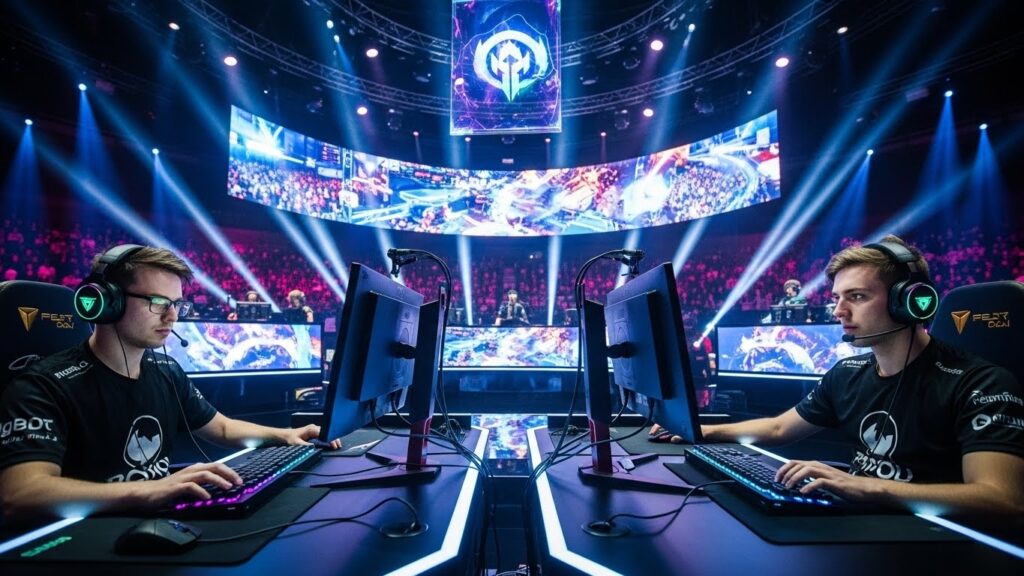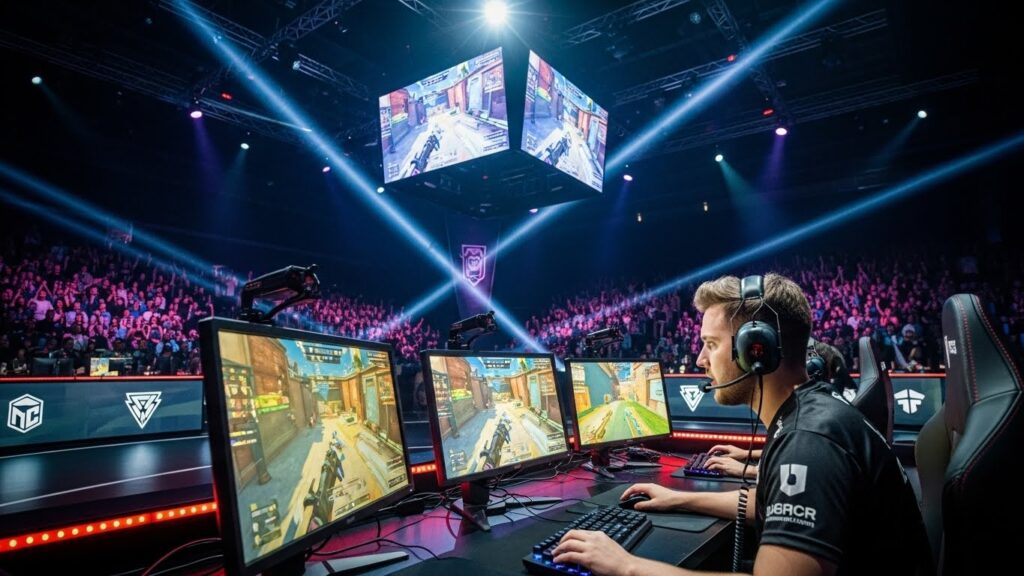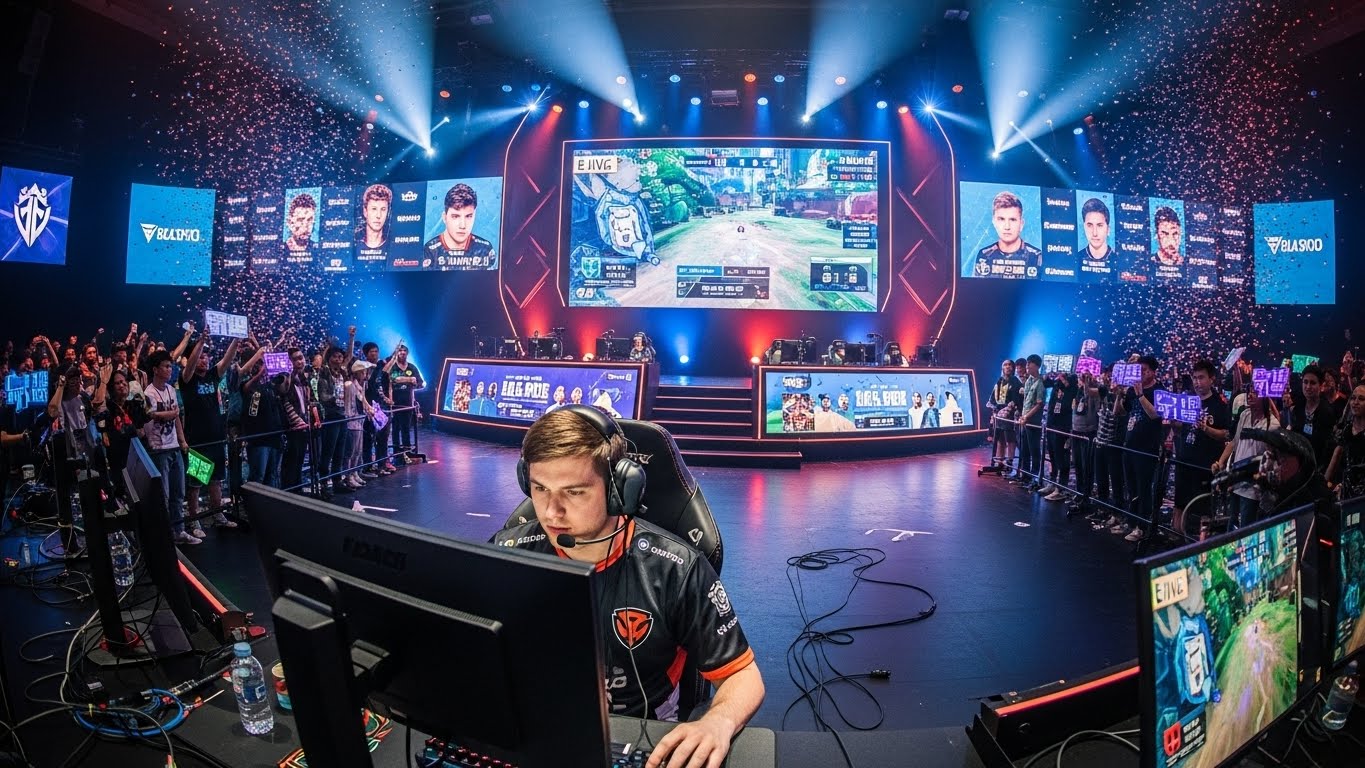
Esports, or electronic sports, has transformed from a niche activity enjoyed by a select group of players into a global industry worth billions of dollars. From humble beginnings in basement tournaments to large-scale international competitions broadcast to millions of viewers, esports has grown into a mainstream entertainment force. In this blog post, we will explore the history, evolution, and impact of esports, diving into its growth, the role of technology, and how it has impacted the world of sports, entertainment, and even culture itself.
The Early Days of Esports
The concept of competitive gaming can be traced back to the early 1970s. In fact, the first known esports competition took place in 1972 at Stanford University, where students competed in a game called Spacewar. This event, titled the Intergalactic Spacewar Olympics, may have been small, but it set the groundwork for the competitive nature of gaming.
However, it wasn’t until the 1990s that esports truly began to take shape. As personal computers became more accessible and internet speeds improved, online gaming started gaining traction. Games like Warcraft and StarCraft became central to the competitive gaming landscape. The first major esports tournaments during this period were often small, regional events. Still, they introduced the idea that gaming could be more than just a hobby – it could be a serious competition with skilled players and, potentially, large prizes.
The Rise of Professional Esports
The turn of the millennium marked a turning point for esports, as gaming companies began to invest more into their competitive scenes. Titles like Quake III Arena, Counter-Strike, and StarCraft: Brood War established the foundation for the professional esports ecosystem. These games were fast-paced, requiring precision, strategy, and teamwork, making them ideal for competitive play.
In the early 2000s, organizations dedicated to esports began to emerge. One of the first major steps towards a global competitive scene was the creation of the World Cyber Games (WCG) in 2000. The WCG brought together players from all over the world to compete for national pride and hefty prizes, laying the groundwork for future global competitions.
In parallel, the rise of streaming platforms like Twitch in the early 2010s played a pivotal role in the growth of esports. Twitch, founded in 2011, allowed gamers to stream their gameplay to a massive audience, creating a direct connection between players and fans. As more viewers tuned in to watch their favorite gamers compete, esports became more visible and popular, eventually attracting sponsorships from major brands.
Esports as a Multi-Billion-Dollar Industry
By the mid-2010s, esports had firmly cemented itself as a multi-billion-dollar industry. This was driven by a combination of factors: a global fanbase, brand sponsorships, increasing prize pools, and dedicated streaming platforms. According to Newzoo, the global esports industry was expected to surpass $1 billion in revenue by 2019, a milestone that was quickly achieved.
One of the key factors in the growth of esports as an industry was the influx of sponsorships and investments from major corporations. Brands that traditionally had little to do with gaming began to see the potential in the esports market. Companies like Coca-Cola, Red Bull, Intel, and Toyota started sponsoring esports events, teams, and even individual players. These partnerships helped to fund tournaments, increase prize pools, and expand the reach of esports.
The rise of esports broadcasting on television and through digital platforms like YouTube and Facebook has also contributed to its expansion. Major tournaments like The International (the annual Dota 2 championship) and the League of Legends World Championship now attract millions of viewers, with some events even filling massive arenas such as the Staples Center in Los Angeles.
The economics of esports also support the industry’s growth. Prize pools for games like League of Legends, Counter-Strike: Global Offensive, and Fortnite regularly reach tens of millions of dollars, creating a viable career path for professional gamers. In addition to winnings, players can earn money through sponsorships, streaming, and even content creation on platforms like YouTube.
The Role of Technology in Esports Growth
Technology has played a crucial role in the rise of esports. Faster internet speeds, more powerful gaming hardware, and advancements in broadcasting and streaming technology have all contributed to the industry’s success.
- Internet and Connectivity: One of the earliest hurdles for competitive gaming was the lack of reliable internet connections. Online play in the 1990s was often plagued by latency and connectivity issues, making it difficult to organize large-scale competitive events. However, as broadband and fiber-optic internet became more widely available, the esports scene was able to thrive. Low-latency connections and high-speed internet are now the norm, allowing for seamless online competitions.
- Gaming Hardware: Advances in gaming hardware, such as graphics cards, processors, and peripherals, have also contributed to the development of esports. High-performance computers and gaming consoles enable players to execute intricate strategies and maintain fast reaction times, which are critical in competitive gaming. Companies like Nvidia, Intel, and Razer now sponsor tournaments, providing the best technology to support esports.
- Broadcasting and Streaming: The development of streaming platforms such as Twitch, YouTube Gaming, and Facebook Gaming has helped esports reach a global audience. These platforms allow fans to watch live events from anywhere in the world. The ability to interact with players and other viewers in real time has created a new form of entertainment that merges gaming with social media. As more tournaments are broadcast live, viewership continues to grow exponentially.
- Virtual Reality and Augmented Reality: Although still in the early stages, virtual reality (VR) and augmented reality (AR) technologies are starting to make their presence felt in the esports world. VR offers a fully immersive experience, and AR can enhance gameplay by adding interactive elements to real-world environments. While these technologies are not yet mainstream in esports competitions, they have the potential to revolutionize how games are played and broadcast in the future.
The Impact of Esports on Popular Culture
Esports has gone beyond just being a form of entertainment—it has had a significant impact on popular culture, especially among younger generations. In fact, for many young people today, watching professional esports events is as normal as watching traditional sports.
- Cultural Shifts: Esports has helped redefine what it means to be an athlete. While traditional sports require physical prowess, esports athletes rely on mental acuity, strategy, and teamwork. This shift has led to a rethinking of how we define talent and skill in the modern world. Esports stars are now celebrities in their own right, with a following similar to that of professional athletes in traditional sports.
- Esports in Mainstream Media: Esports has even begun to cross over into mainstream media. Networks like ESPN have started to cover major esports events, and esports players have appeared on talk shows and even in commercials. The success of esports has led to discussions about its inclusion in the Olympics, though there is still debate about what constitutes a “sport.”
- Educational and Career Opportunities: Esports has also opened up new career paths, both for players and for those in related fields. Universities around the world have established esports programs, offering scholarships and degrees in esports management, game development, and broadcasting. Many schools now have esports teams, competing in high school and collegiate leagues. Esports careers are no longer limited to professional players; there are now opportunities for coaches, analysts, commentators, event organizers, and more.
- Social Impact and Communities: Esports has also played a role in bringing people together from diverse backgrounds. Online multiplayer games provide a platform for players to connect, collaborate, and compete, building global communities. Tournaments and streaming channels serve as a form of socialization for millions of fans worldwide. Additionally, esports has created spaces for gamers to discuss important topics such as mental health, diversity, and inclusion within the gaming community.
The Future of Esports
As esports continues to evolve, the future holds even more promise. We can expect more integration of virtual and augmented reality into gaming, creating more immersive experiences for players and fans. The growing accessibility of gaming platforms will likely lead to even more people participating in competitive gaming, both as players and spectators.
Furthermore, the industry’s expansion into new territories, such as China, India, and Africa, will open up new markets and increase global competition. Esports is likely to become a significant part of the global sports landscape, with more televised events and larger sponsorship deals.
Additionally, the continued rise of mobile esports is a trend to watch. With mobile gaming becoming increasingly popular worldwide, games like PUBG Mobile and Free Fire have already built large competitive scenes, and this will only grow in the coming years.
Conclusion
Esports has come a long way from its early days of informal competitions in arcades and living rooms. Today, it is a global industry with a diverse, passionate fanbase, attracting sponsorships from major brands and offering career opportunities for thousands of people worldwide. The combination of cutting-edge technology, increased accessibility, and growing cultural significance has propelled esports into the mainstream, and it’s poised for even greater success in the years to come. As esports continues to evolve, it’s clear that competitive gaming is no longer a fad—it’s a permanent fixture in the world of sports and entertainment.